One Sentence, Two Outputs: The Brief Behind a Logo Is the Brief Behind a Site
The description that gets you a good logo is the same description that gets you a good homepage. Write it once, properly, and stop rewriting it badly every time something new needs building.
By Bardhyl Bytyqi
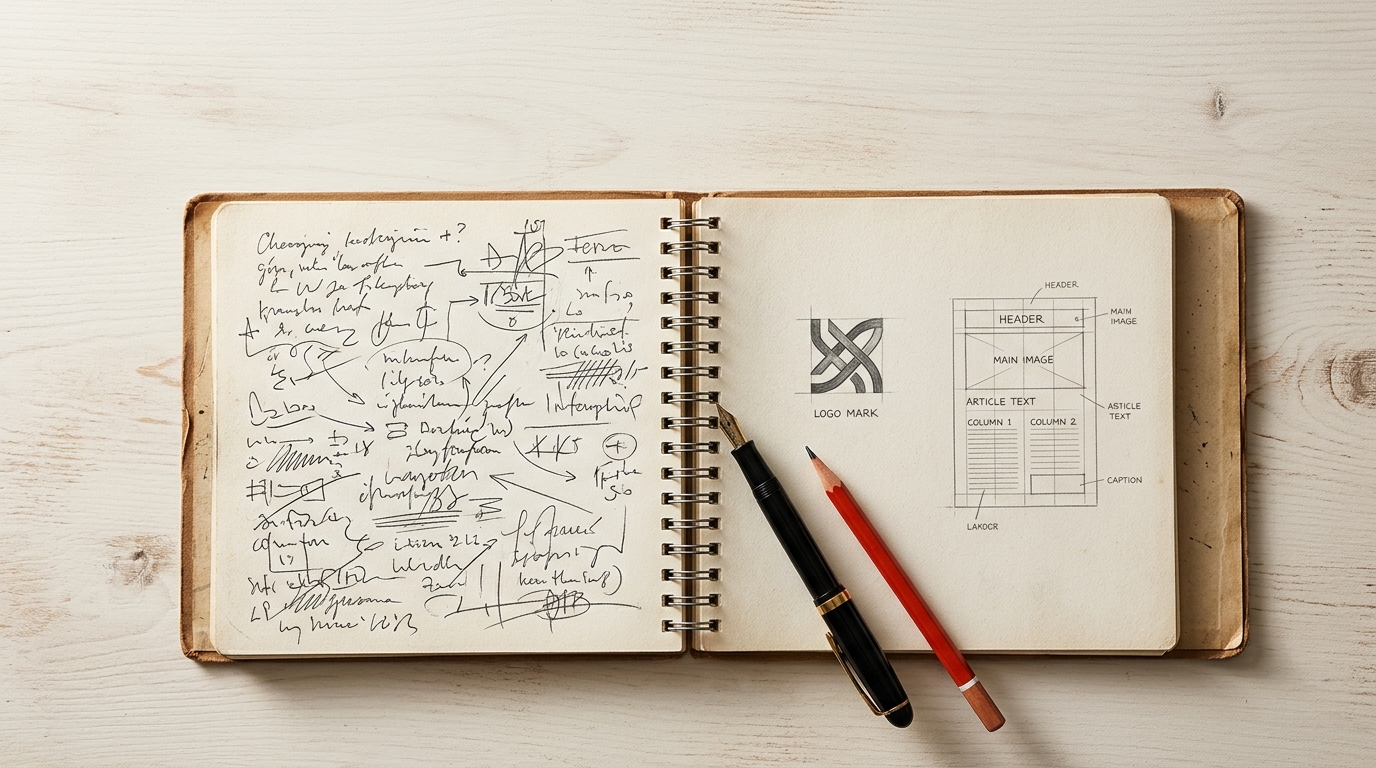
Most people write the sentence twice. Once, carefully, when they ask for a logo. Then again, hurriedly and worse, a month later when something else needs to know what the business is: a website, a directory listing, a pitch, a social bio.
It is the same sentence. Writing it once and keeping it is the highest-leverage twenty minutes in a launch, because everything downstream is a translation of it.
What the sentence has to contain
A brief that produces a good mark has five parts, and none of them are adjectives about design. The full version is in how to describe your business to an AI, but in short:
- What you actually do, in the words a customer would use rather than the words your industry uses.
- Who it is for, specifically enough to exclude someone.
- Where it lives: a shopfront, a phone, a shelf, a browser tab.
- The tone, in two words at most, and preferably ones that have an opposite.
- One thing to avoid, which does more work than three things to include.
What changes when you aim it at a page
Almost nothing, which is the useful part. A logo request and a homepage request both ask a machine to make judgement calls on your behalf, and both fail the same way: vagueness in, generic out. The argument is made properly in Modulify's piece on how the prompt is the new design brief, and it applies to a landing page exactly as it applies to a mark.
Three things do get added when the output is a page rather than a symbol:
- What you want the visitor to do. A logo has no call to action. A page has exactly one that matters, and naming it changes the whole layout.
- What you already have. Photographs, testimonials, a price list, nothing at all. This decides how honest the first draft can be.
- What the visitor already knows. Somebody arriving from a recommendation needs a different opening line than somebody arriving from a search.
The words that do the most work
Concrete nouns beat adjectives, every time. A speciality coffee roaster in Lisbon gives both a mark and a page something to hold onto. A premium, innovative coffee experience gives neither, and will return the same result it returns for every other business that describes itself that way.
The single most useful line you can add is the one saying what you are not. Not corporate. Not playful. Should not look like a tech startup. Exclusions are unambiguous, which is exactly what generic output lacks.
What to leave out
Resist specifying the solution. Asking for a blue circular icon with a leaf gets you a blue circular icon with a leaf, which is a drawing service, not a design one. Describe the business and the constraints and let the options come back wider than you would have drawn them. You can always narrow afterwards; you cannot widen after you have dictated.
Then use it a third time
Once the sentence exists it also writes your social bios, your directory listings, the opening line of a cold email and the meta description search engines show under your name. Those are usually written from scratch, badly, at the moment they are needed. They should all be edits of one paragraph.
Keep it in a note, dated. Rewrite it once a year and notice how the business has moved.
Try it in both directions
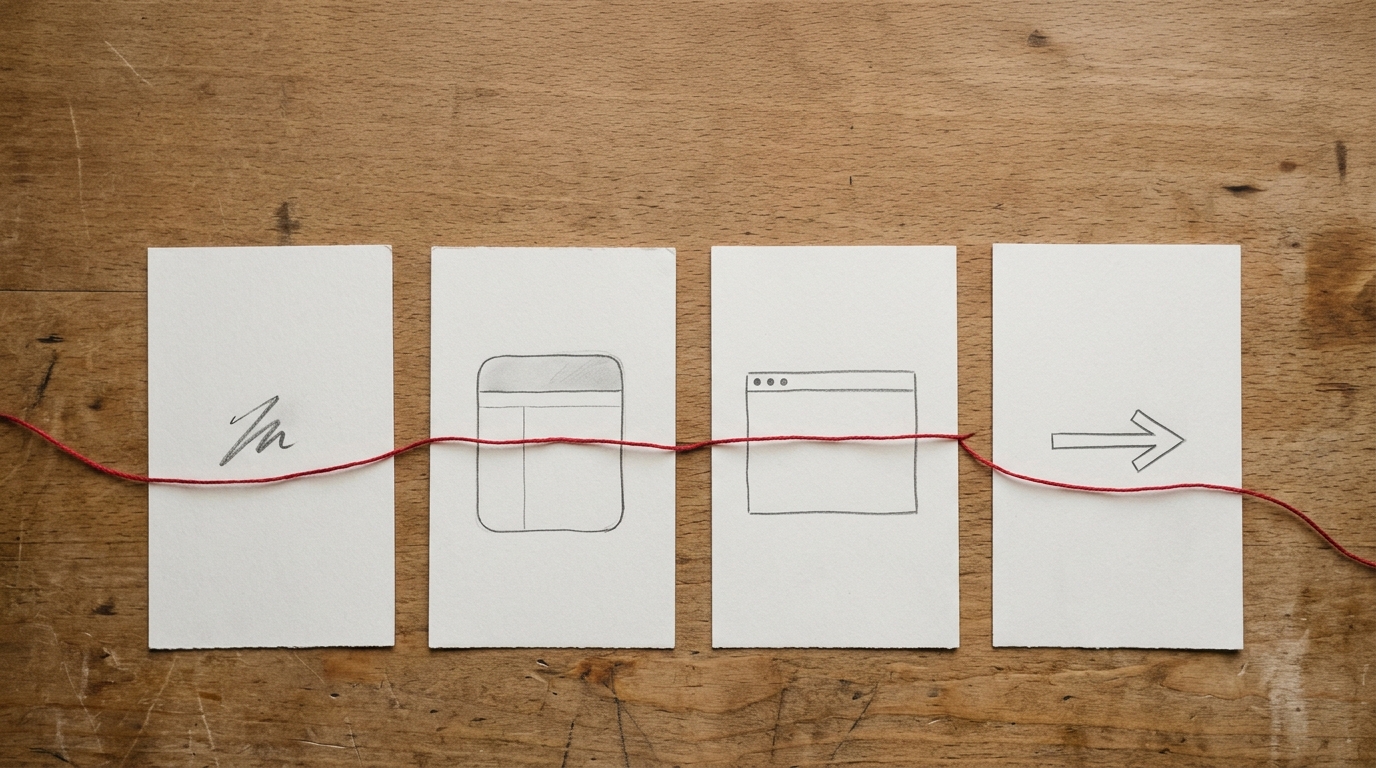
The cheapest test of a brief is to run it twice and see whether both results feel like the same company. Write your sentence and generate a mark, then hand the same words to Modulify and see what it builds as a page. If the two disagree, the brief is the thing that needs work, not either output.